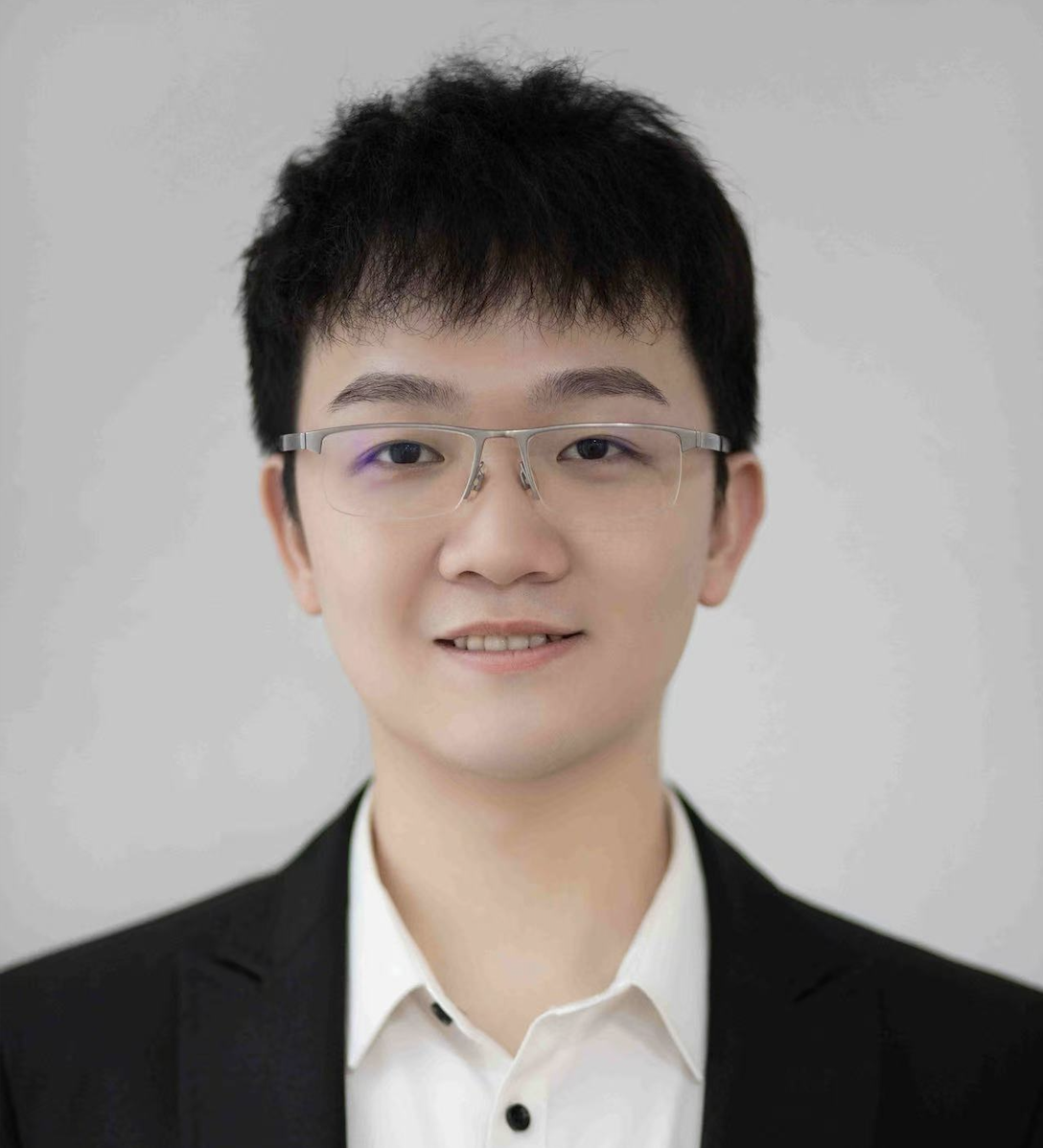
Siyang Li
Biography
My research spans machine learning theory, algorithms, and models. Technically, I study transfer learning, ensemble learning, and multimodal learning. I am also familiar with signal processing techniques, modern large language models and vision-language models (LLMs/VLMs).
For applications, I am particularly interested in brain decoding for brain-computer interfaces (BCIs). For the long-term goal, I aim at multimodal human-computer interaction systems for future generations.
News
- PositionI am looking for postdoc positions in AI / Agents / BCI / BME / Neuroscience. Feel free to contact me for related positions.
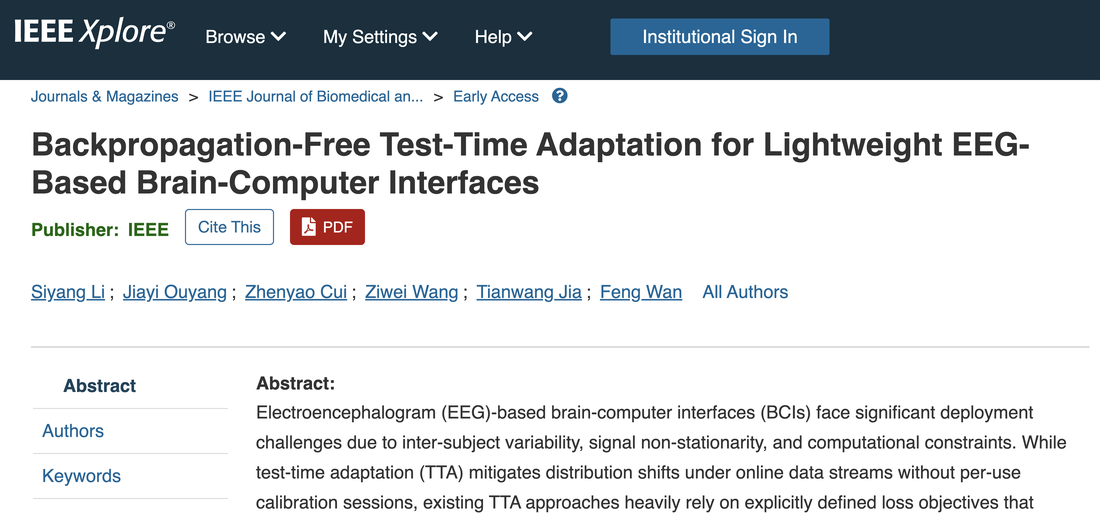
- PublicationOur paper Backpropagation-Free Test-Time Adaptation for Lightweight EEG-Based Brain-Computer Interfaces is now published (Early Access) in IEEE Journal of Biomedical and Health Informatics! Many thanks to my co-first authors Jiayi Ouyang and Zhenyao Cui!
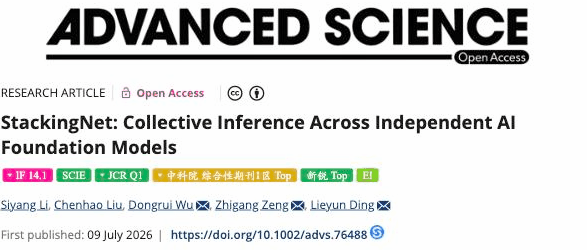
- PublicationOur paper StackingNet: Collective Inference Across Independent AI Foundation Models is now published (Open Access) in Advanced Science! Many thanks to my co-first author Chenhao Liu!
- Open SourceI built and will manage HUST-BCIML, a repository collecting the published code and related resources of Prof. Dongrui Wu's lab.
Education
- Ph.D. in Artificial Intelligence2026School of Artificial Intelligence and Automation, Huazhong University of Science and Technology, ChinaSupervisor: Prof. Dongrui Wu
- Master in Artificial Intelligence2021College of Arts and Science, Boston University, USA
- Bachelor in Mathematics and Computer Science2018Courant Institute, College of Arts and Science, New York University, USA
Selected Publications
Poster, the 2nd Chinese Conference on Brain-Machine Intelligence (ChinaBMI), CAAI, 2025China Patent
Youth Paper Defense Competition Award, World Robot Contest (WRC) - BCI Track, 2023Poster, Spotlight, the 1st Chinese Conference on Brain-Machine Intelligence (ChinaBMI), CAAI, 2024China Patent
Code
Unified EEG-decoding benchmark and a searchable paper-to-code gallery for the Brain-Computer Interface and Machine Learning Lab (BCIML), HUST.
Deep transfer learning for EEG-based brain-computer interfaces (code of T-TIME and BFT).
Test-time combination of black-box model predictions (code of StackingNet and SML-OVR).